Measurement that
finance can review.
Most companies can list their AI tools. Far fewer can give finance a concise, supported answer about the return. Oabo Scorecard closes that gap with a record of what was spent, what was done and what the evidence supports.
What it does
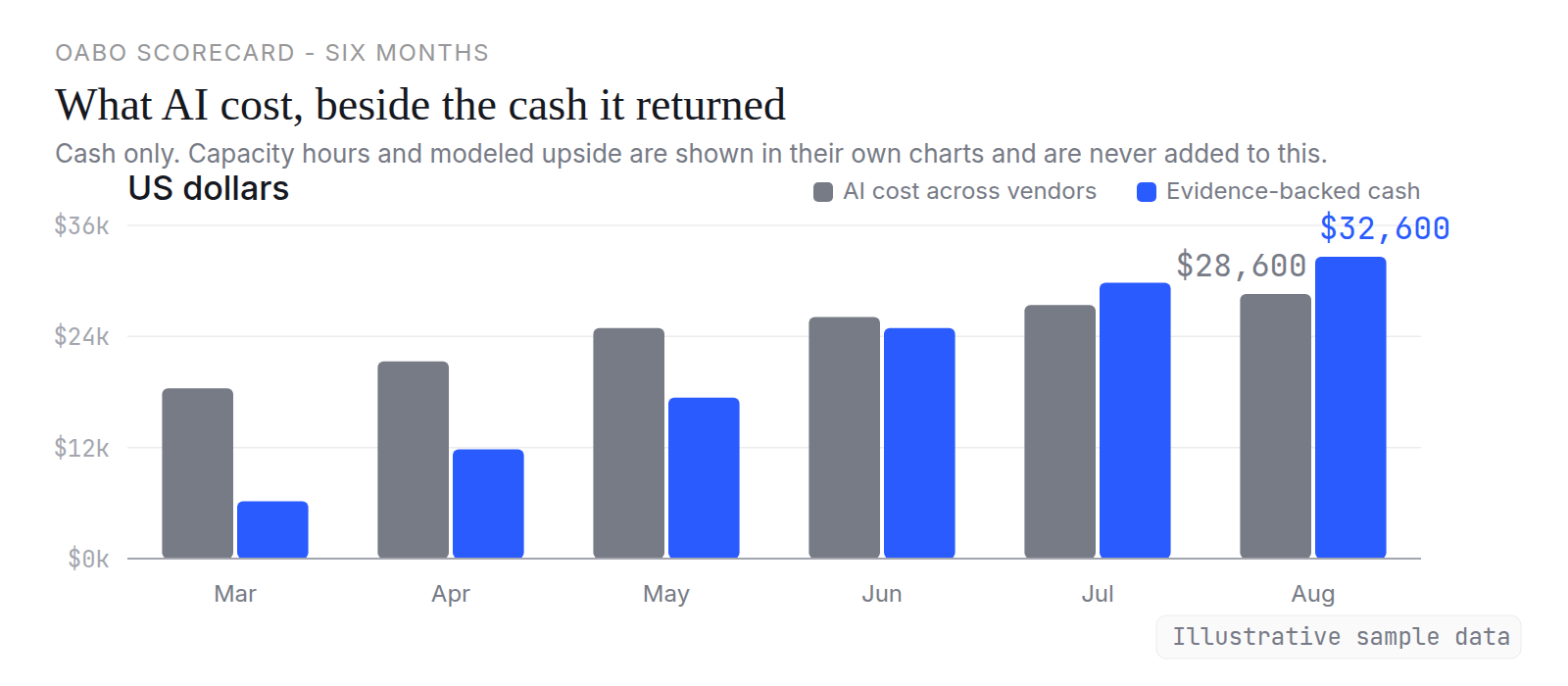
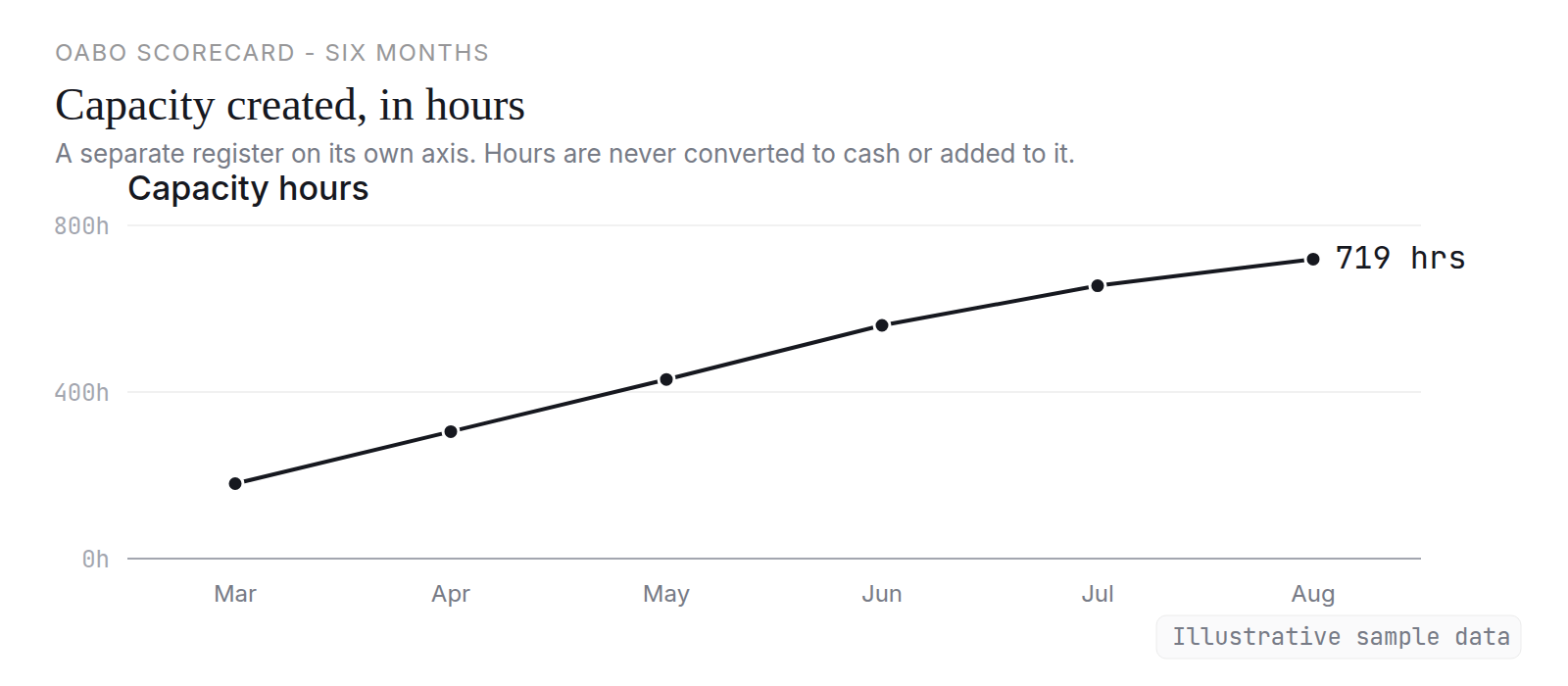
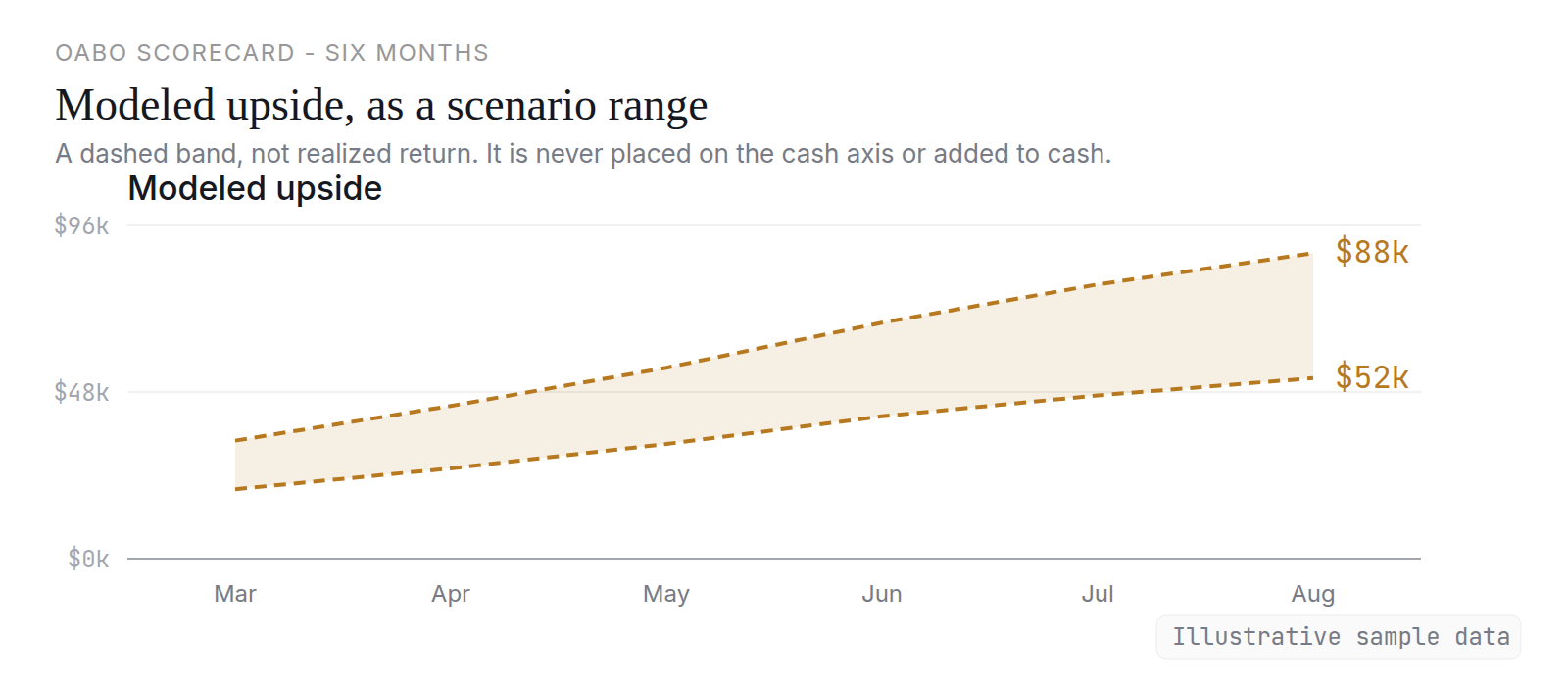
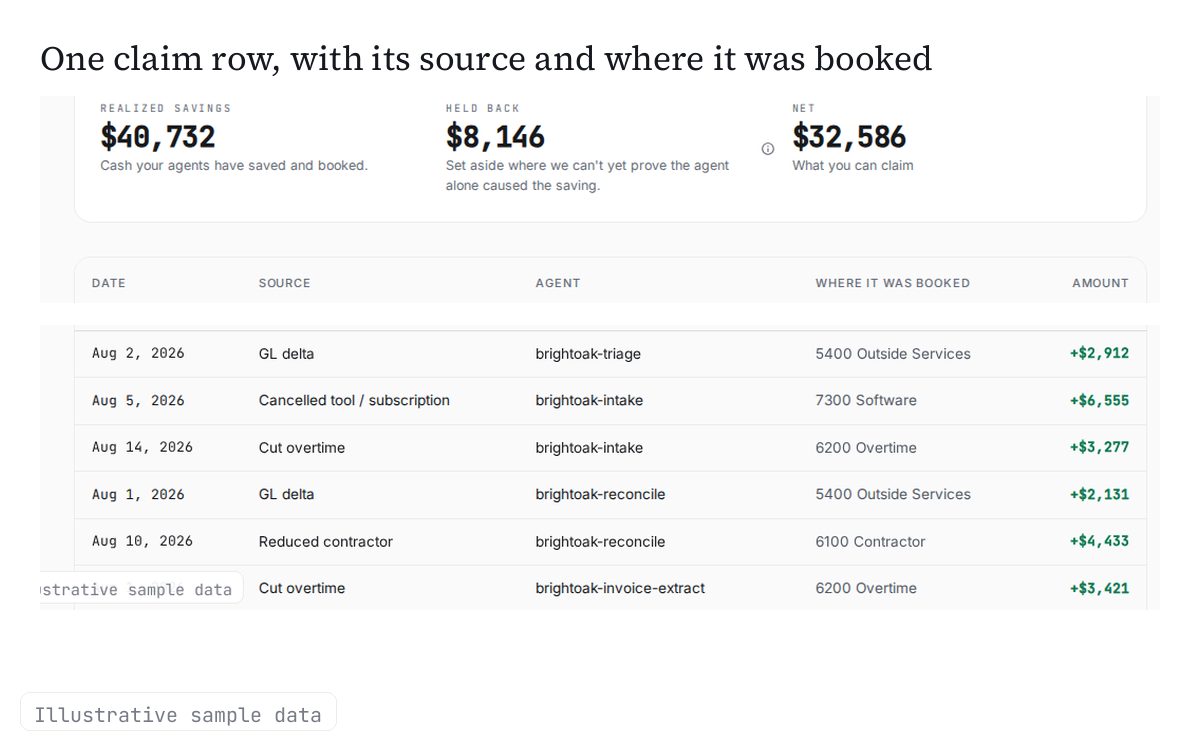
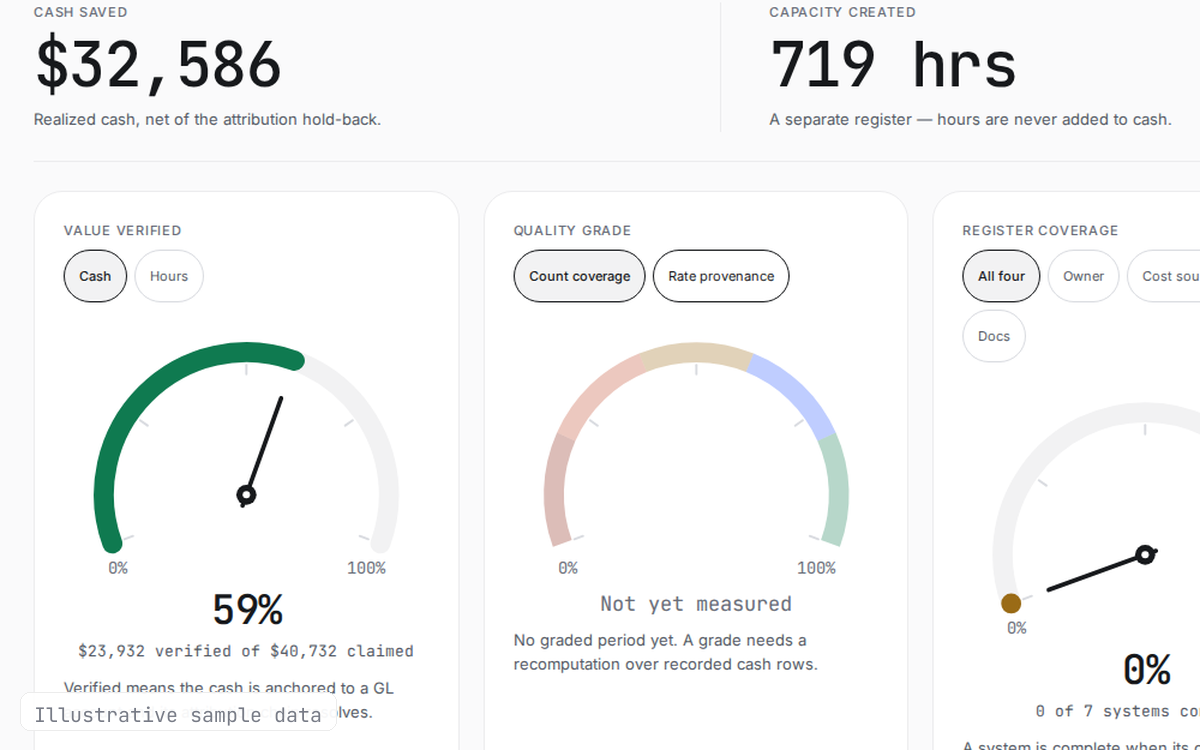
Collects AI costs across vendors, counts the work AI supports, and records benefit evidence with a review status that moves from self-reported to validator-confirmed to audit-signed-off. The result is a concise monthly report. Cash returns, capacity in hours and modeled upside are always shown separately and never added into a single number.
Who it is for
AI-forward mid-market and lower-enterprise firms, typically several hundred to several thousand employees. A Head of AI or equivalent champions the work, finance validates the economics and the CFO or CEO makes the investment decision. Counsel and investors use the same record when an AI value claim has to be examined later.
Start before the process is perfect
A company does not need a finished finance approval process to get a useful first answer. Spend, observed adoption and provisional capacity are a legitimate starting point. Supported cash benefits and independent review are added as that evidence becomes available.
What it does not claim
An evidence record shows what was recorded and who reviewed it. It does not establish that AI caused a business result, and an internal review status is not external assurance. Saved time stays in hours; it is not converted into dollars. Other AI measurement products exist.
Identifying benefits
The best tool for finding where agentic AI is creating value in the business — and, just as usefully, where it is not.
Focusing on the right benefits
The best tool for deciding which benefits are worth measuring, owning and pursuing, so effort goes to the claims that will matter to finance.
Scaling benefits from ROI
The best tool for using the ROI evidence to decide what to expand, what to change and what to stop.
Understanding the costs and benefits behind ROI
The best tool for seeing AI costs across vendors beside the benefits they supported, with cash returns, capacity hours and modeled upside always shown separately.
Communicating
The best tool for producing a finance-reviewable monthly report and a board-ready readout that leadership reads quickly and an analyst can check.
Inventorying agentic AI use
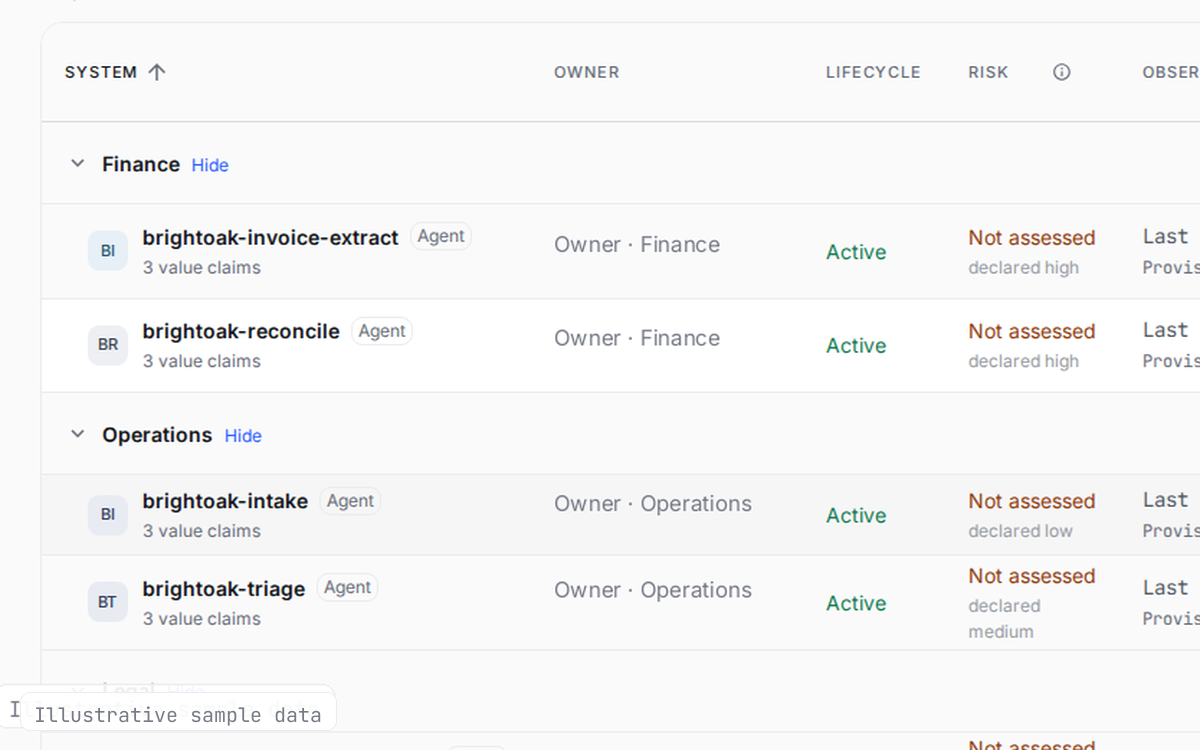
The best tool for keeping every model, copilot and agent across the organization in one inventory, each with an accountable owner — ChatGPT, Claude and the other tools your teams already use. The inventory records whatever your teams run; we work across providers and are tied to none.
AI adoption & implementation
Set a baseline before the pilot starts, then track cost, counted work and benefit evidence against it. At the review date the decision to expand, improve or stop a workflow rests on a record both the business owner and finance have seen.
AI adoption & implementationSafe AI use
The AI system inventory and ownership record live in the same place as the economics. Each agent, workflow or model carries an accountable owner, so the control work and the investment case draw on one list rather than two.
Safe AI useValidation and expert work
Claims, supporting documents, review steps and their sequence are retained, so any independent analyst can follow a reported figure back to the records behind it and see which items were excluded and why. Validation and expert testimony assignments are scoped to preserve independence and do not introduce our own product into the work.
Model validation
Expert testimony
What a first month looks like
Week one: agree the AI systems in scope, name an owner for each and connect the cost sources. Weeks two and three: count the work the agreed workflows support, record benefit evidence with its review status and set the baseline you will measure against. Week four: produce the monthly report — spend by system, counted work, cash returns and capacity hours shown separately, open findings and what the evidence supports. Then decide what to scale.
Request access ↗
See how it works ↗
Pricing ↗
The Starter plan's free 30-day trial covers up to three AI systems and needs no card. Access is granted on request rather than instant sign-up.